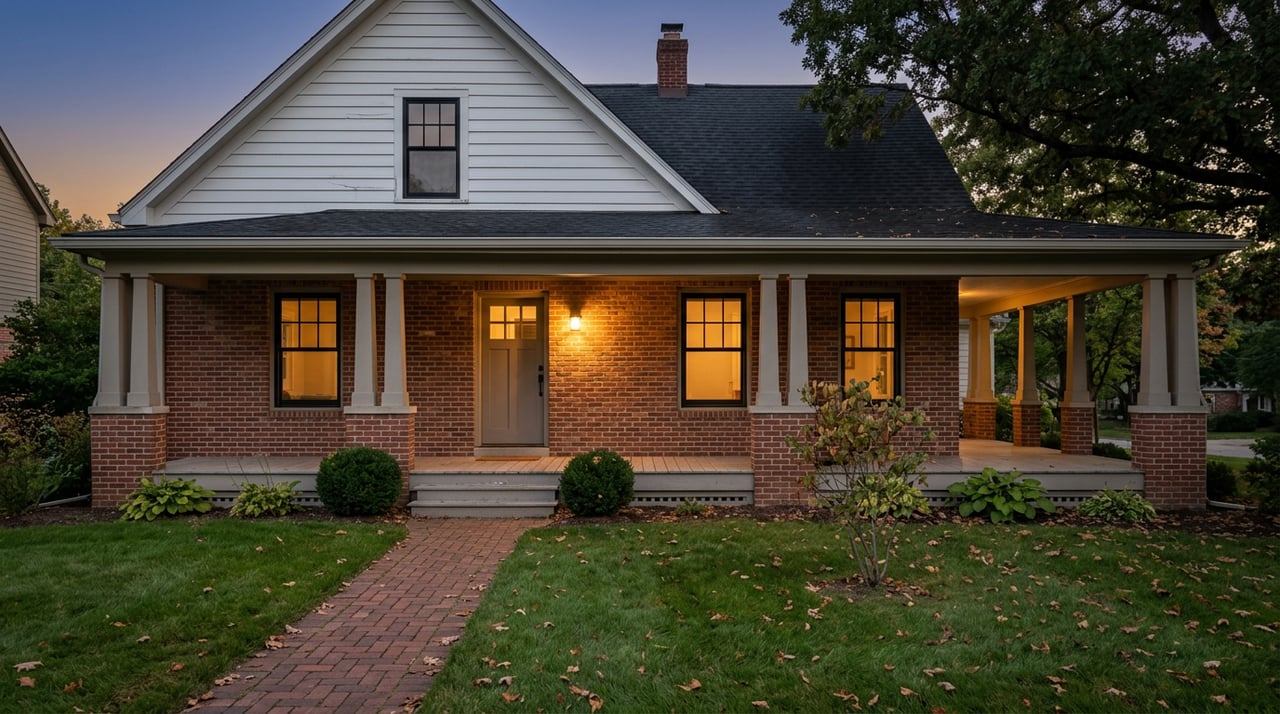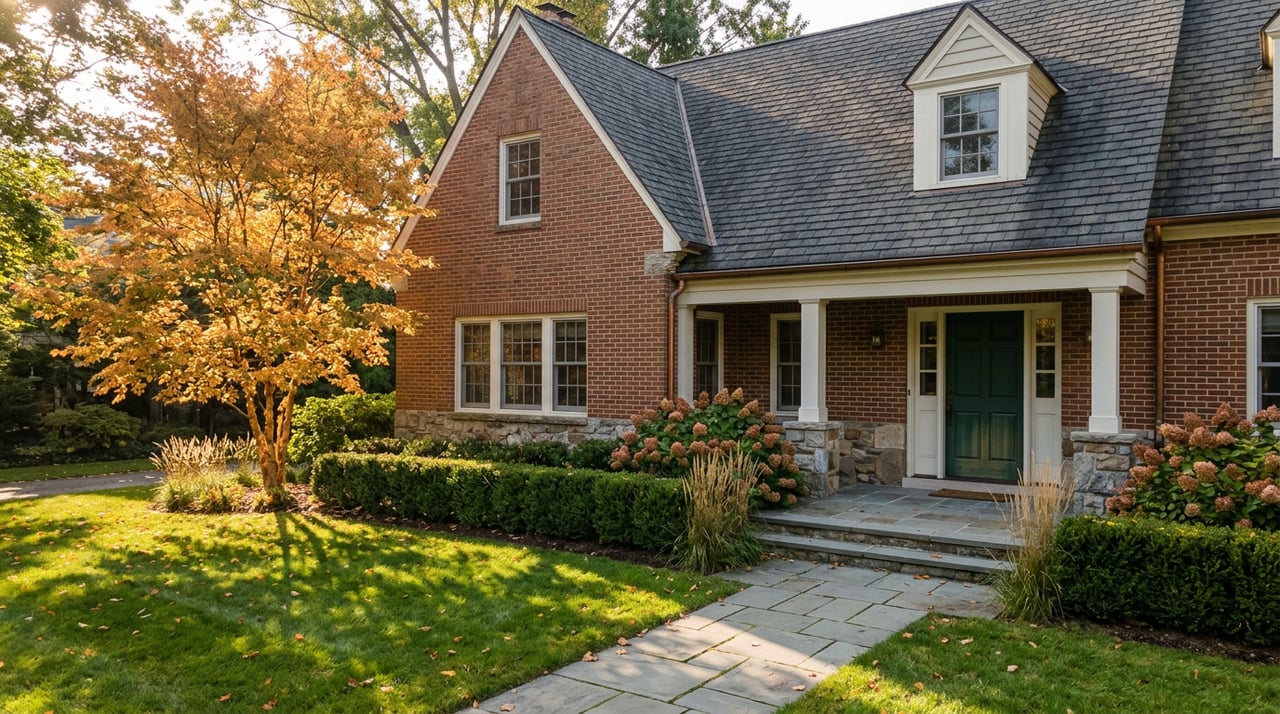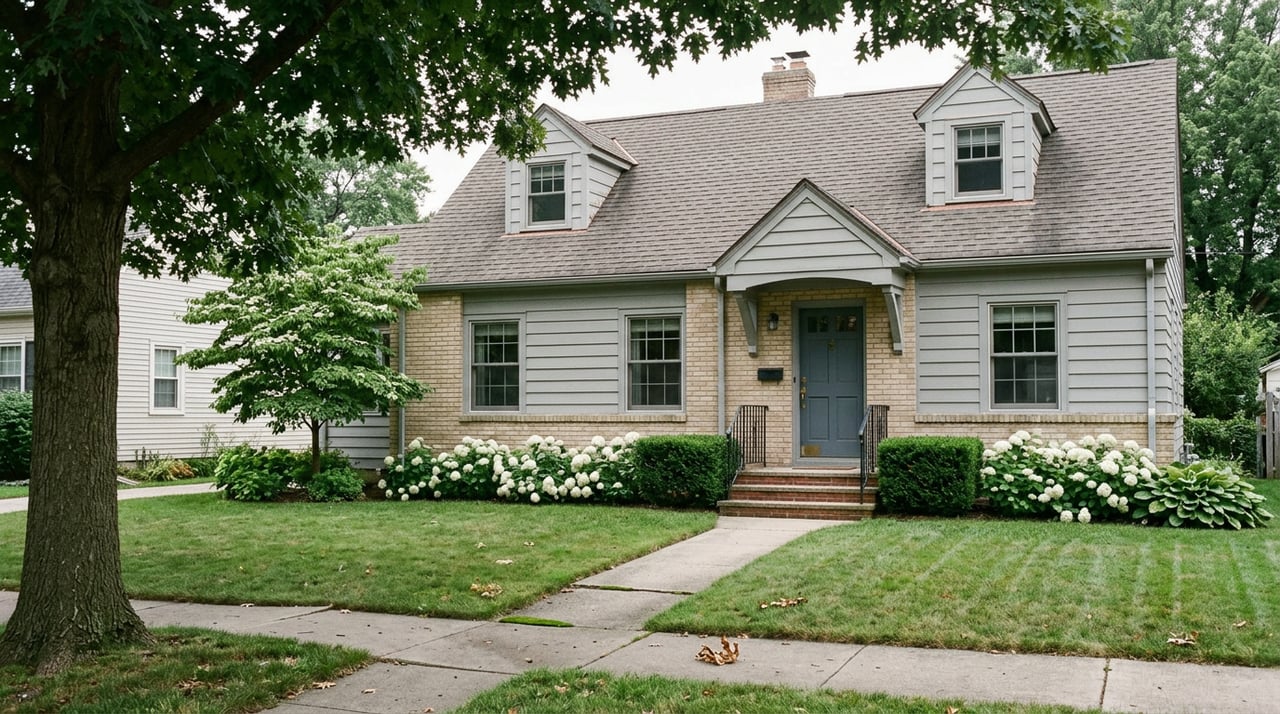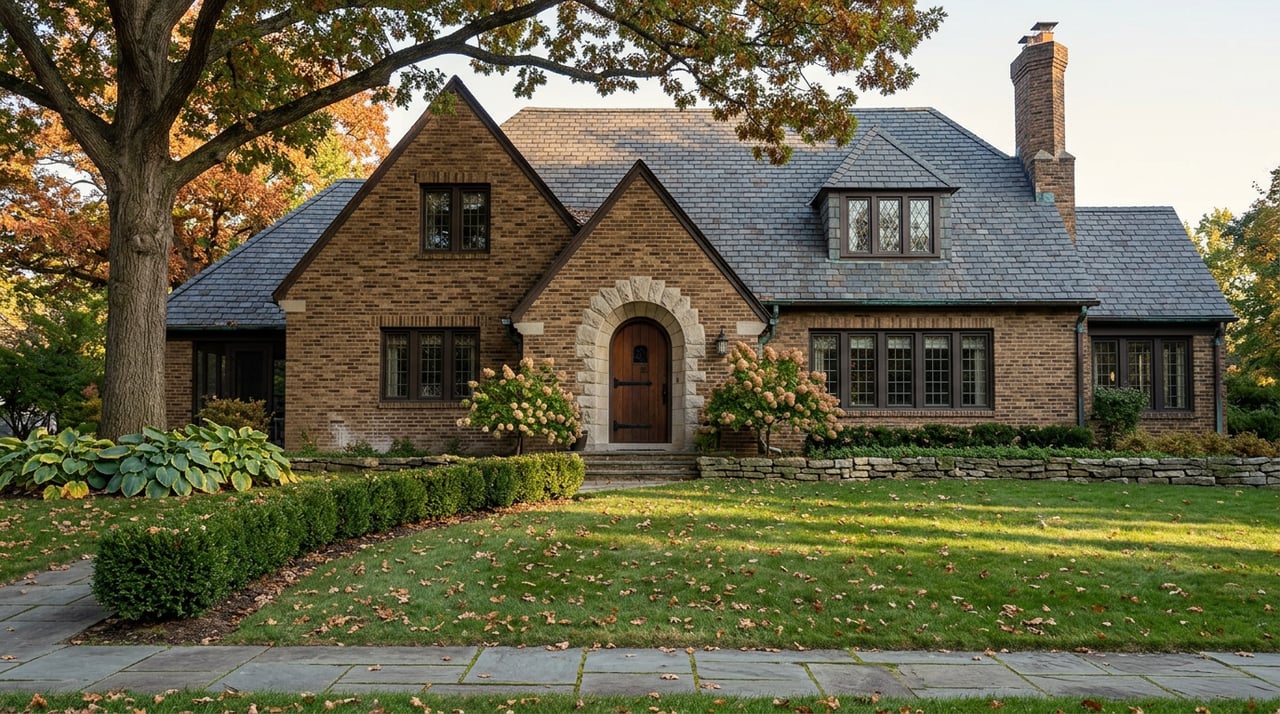
Walk any block in Palmer Woods and you will not pass a single business address. No coffee shop, no dry cleaner, no corner store. Just curving streets, deep lawns, and rooflines designed by Albert Kahn, Minoru Yamasaki, and Frank Lloyd Wright. And yet this collection of roughly 300 houses west of Woodward Avenue keeps a full calendar all year long. Ask a longtime resident where that calendar actually lives and you will get two different answers, because Palmer Woods runs on two systems that barely overlap. One is public and happens outdoors, a few hundred feet from the district line. The other is private and happens indoors, inside the houses themselves. Neither one needs a storefront.
A district built with no room for a sign
Palmer Woods was platted more than a century ago as a purely residential enclave, and it has stayed that way by design. The streets wind on purpose, discouraging through traffic. The lot sizes accommodate Tudor Revival mansions and Mediterranean estates, not retail bays. The neighborhood's own historical materials describe an "enclave of about 300 homes" bordered by Woodward on the east and Seven Mile on the north, with architecture ranging from Tudor Revival and Neo-Georgian to Mediterranean, Modern, and Craftsman. The most famous example, the Turkel House, is Frank Lloyd Wright's only residential commission built within Detroit's city limits.
That kind of density of design pedigree usually comes paired with a commercial strip somewhere close by, the way Palmer Woods' neighbors have theirs. Palmer Woods does not. There is nowhere in the district to grab a sandwich or post a flyer. Which raises the actual question worth answering if you already live here: where does the neighborhood's social life happen, and who is actually organizing it?
The public half lives next door, not inside the boundary
The answer starts at Palmer Park, immediately south of the district along Woodward, between McNichols and Seven Mile. Palmer Park is not part of Palmer Woods on a map, but it functions as the neighborhood's only shared outdoor space, and it is run almost entirely by a nonprofit called People for Palmer Park, an Adopt-a-Park Community Partner with the City of Detroit. This group programs Palmer Park's calendar the way a downtown business association might program a plaza, except the anchor tenant here is Witherell Woods, described by Detroit Public Radio as the largest old-growth forest remaining in the Tri-County area.
That old-growth forest is not incidental scenery. It is the setting for most of the park's marquee events, and the 2026 calendar has been unusually active:
| When | Event | What it actually is |
|---|---|---|
| April 25, 2026 | Art and Music in the Trees | An Earth Day-adjacent festival, presented by Integrity Shows, that turns the old-growth canopy into an open-air gallery of crafts, exhibits, and performances |
| May 2026 | Great Detroit Bird Off launches | Detroit Bird Alliance's first friendly count comparing bird sightings across the city's four largest parks |
| September 19, 2026 | Harvest Festival | People for Palmer Park's annual Fall Equinox celebration, with hayrides through Witherell Woods |
People for Palmer Park also runs a Log Cabin Day and a WinterFest most years, alongside a juried Palmer Park Art Fair that draws well over 100 artists. None of it happens inside Palmer Woods proper. All of it is the closest thing the neighborhood has to a commons.
What's actually happening this month
The Harvest Festival lands on September 19, 2026, from 1 to 4 p.m., timed to the fall equinox, the official start of the season. The location is specific: across from the Splash Park on Merrill Plaisance, next to the park's Community Garden and Community House at 990 Merrill Plaisance, between McNichols and Seven Mile, west of Woodward.
What makes this festival different from a generic fall fair is that the harvest is literal. Palmer Park was once farmland, and the apple trees planted from that era are still standing. The festival's apple tasting draws on several distinct varieties grown on-site, alongside fresh corn and, for the first 500 attendees, free cider and donuts. That cap is its own small data point. Turnout has run large enough in recent years that organizers plan around running out.
The hayride route runs through Witherell Woods itself, and the Huron-Clinton Metropark Mobile Learning Center sets up alongside it with furs, feathers, skulls, and live animals for kids to handle directly. It is the one weekend where the old-growth forest, usually a quiet walking path, becomes the literal route of the event.
If you are counting on the Home and Garden Tour to be this year's big public gathering, it will not be. That tour is biennial and last ran on July 26, 2025, with ten homes and gardens open including the Turkel House gardens and a restored 1925 Tudor Revival. Under that two-year rhythm, the next one is due back in 2027, not this fall. Which makes the September 19 Harvest Festival the closest thing to a large public event Palmer Woods gets access to in all of 2026.
Meanwhile, behind the hedges
The second calendar never touches Palmer Park at all. It is run by the Palmer Woods Association, for residents, mostly inside actual houses, and it rarely shows up in a citywide events search because it is not built to.
The clearest example is Friday Twos, a monthly gathering held on the second Friday of every month at a rotating slate of Palmer Woods homes. There is no fixed venue and no public listing. You find out where it is because you already know someone who lives here. The Association also programs a Music in Homes concert series featuring Detroit-rooted musicians performing inside members' living rooms, and a PW Opera Club that pairs neighborhood gatherings with upcoming Michigan Opera Theatre productions. A Children and Families Committee runs its own separate track, from block picnics to driveway chalk art exhibitions.
Then, once every two summers, the private and public halves briefly merge for the Home and Garden Tour, when outsiders are invited past the hedges to see homes like the restored 1921 Dutch Colonial with its Lord and Burnham conservatory, or the Wallace Frost-designed French Eclectic residence built in 1928. As one write-up of a past tour put it, Palmer Woods "strives to preserve both its history and its majesty." The rest of the year, that majesty stays private.
The Association also maintains a Holiday Home Tour and Soirée as a December tradition, giving the neighborhood its own version of a public event during the darker months, distinct from anything Palmer Park programs.
Reading the two calendars together
None of this means Palmer Woods is quiet. It means the neighborhood's visible footprint online belongs almost entirely to Palmer Park's public roster, since that is what shows up on event calendars and news sites. The other half, the one that actually fills most weekends for people who live here, runs on word of mouth and HOA membership, inside a building envelope that never needed a commercial permit in the first place.
For anyone who already calls Palmer Woods home, September answers the calendar question directly. The Harvest Festival on the 19th is the public gathering. Friday Twos is still happening the second Friday of the month regardless. And the Home and Garden Tour is sitting out this year, waiting for 2027.
If you are weighing what your Palmer Woods home is worth in a market shaped by a neighborhood this specific, Team Mishaw knows the difference a Tudor Revival with original plasterwork makes versus one that has lost it. Get your instant home valuation and start the conversation from real numbers, not a guess.