If you are drawn to the energy of Downtown Detroit, you have probably asked yourself a common question: should you buy a condo or go for a loft? It is an important choice, especially in a downtown market where historic character, new development, riverfront access, and easy transit all shape how you live day to day. This guide will help you understand what condo living and loft living really mean in Downtown Detroit, what to compare before you buy, and how to choose the fit that matches your lifestyle. Let’s dive in.
Downtown Detroit Living at a Glance
Downtown Detroit offers a dense urban setting built around public spaces, the riverfront, and an active mix of residential and commercial activity. The Downtown Detroit Partnership describes downtown parks as historic and transformational public spaces, while City of Detroit materials note that 3.5 miles of revitalized East Riverfront park space had been completed by fall 2023.
That matters when you are comparing homes. In a place where public amenities already do a lot of the heavy lifting, your decision may come down less to the neighborhood itself and more to the kind of space, building structure, and ownership model that suits you best.
Campus Martius Park is one of the best-known lifestyle anchors downtown. The Downtown Detroit Partnership calls it Detroit’s gathering place for employees, residents, and visitors, and it was named USA Today’s Top Public Square in 2021.
Getting around is also part of the appeal. Downtown Detroit offers access to MoGo, DDOT, SMART, FAST, rideshare options, the People Mover, and the QLINE, which gives many buyers more flexibility when thinking about parking, daily routines, and how much they want their building to provide.
Condo vs. Loft: The Real Difference
Many buyers treat condos and lofts as if they are opposites, but in Downtown Detroit, that is not always the right comparison. A condo is usually a legal ownership structure, while a loft is usually a description of the space and style.
Under Michigan guidance, condominium documents include the master deed, subdivision plan, bylaws, and disclosure statement. The association of co-owners keeps the books and records for the project, which means condo ownership comes with a formal governance and maintenance framework.
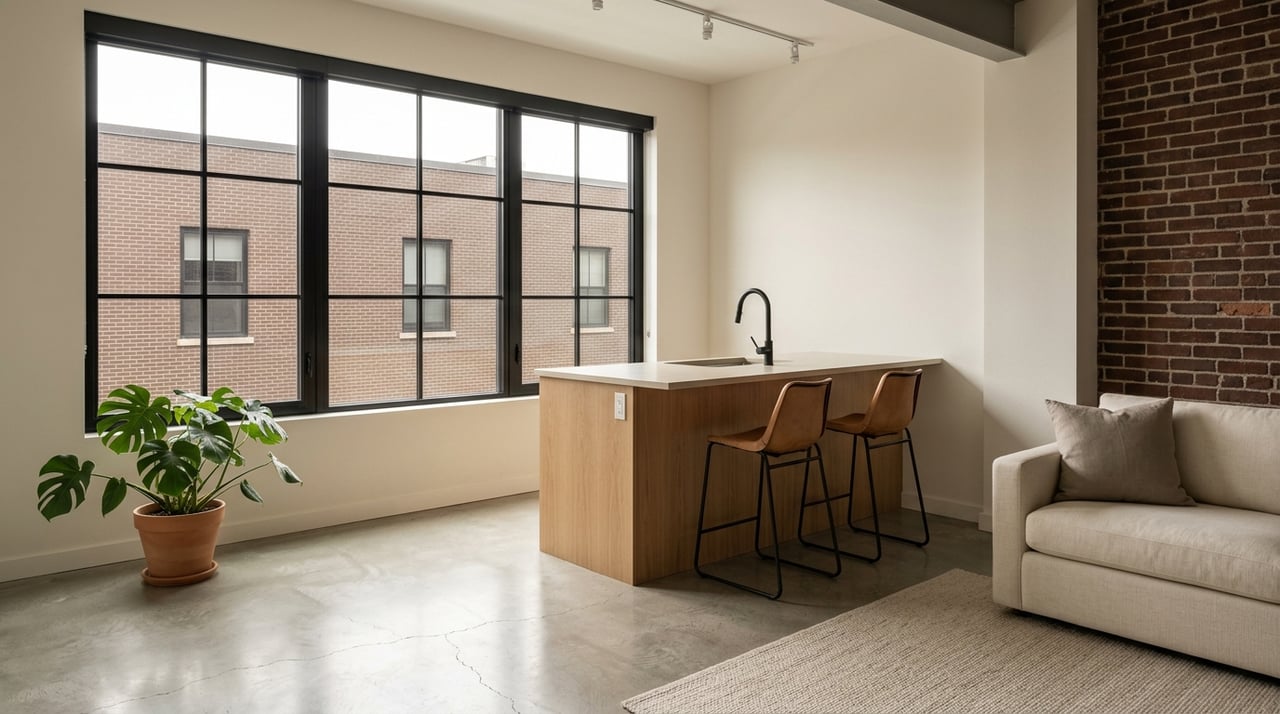
A loft, by contrast, usually refers to a large open space with few interior walls. Loft living is also commonly tied to former industrial, warehouse, or office buildings that have been adapted for residential use.
In Downtown Detroit, those two ideas can overlap. You can find a unit that is legally a condominium and still has loft-style features like exposed brick, original wood floors, open spans, or exposed ductwork.
What Loft Living Feels Like
Loft living often appeals to buyers who want space with personality. In Detroit, adaptive reuse examples show how older warehouse and office buildings have been redesigned for residential living while preserving industrial details and historic texture.
That style can create a very different daily experience from a more conventional condo layout. You may get fewer interior walls, more flexible furniture placement, and a home that feels architecturally distinct rather than standardized.
For some buyers, that character is the whole point. If you want a home that feels rooted in Downtown Detroit’s built history, loft-style living can offer a strong sense of place.
What Condo Living Means in Michigan
A condo purchase in Michigan comes with more than just the unit itself. You are also buying into a shared system of ownership, rules, maintenance responsibilities, and building finances.
Michigan’s Condominium Buyer’s Handbook explains that associations must maintain books and records and make current condominium documents available for review. Associations must also provide annual financial statements, which gives buyers important insight into how the building is managed.
State guidance also says Michigan condo associations must maintain a reserve fund for major repairs and replacement of common elements. The minimum is 10% of the annual budget on a non-cumulative basis.
That is one reason condo due diligence matters so much. Monthly fees can support building upkeep and future repairs, but additional assessments may also be levied if major repairs require more funding.
Why HOA Review Matters
When you buy downtown, it is easy to focus on finishes, views, or ceiling height. Those details matter, but condo documents and association finances can affect your ownership experience just as much.
Monthly fees and assessments can become a lien on the unit under Michigan guidance. That means it is smart to look beyond the number itself and understand what the fee covers, how reserves are funded, and whether the building has a history of special assessments.
You should also review building rules carefully. Michigan guidance notes that condominium documents may be amended regarding rental and occupancy terms, so it is important to understand current policies before you commit.
A lower HOA fee is not automatically a better deal. If a building is underfunded or likely to face major repairs, a lower fee today could mean more financial pressure later.
Key Questions to Ask Before You Buy
Whether you are leaning condo, loft, or a mix of both, a few questions can help you compare options more clearly.
- How much of the building budget is going to reserves?
- Have special assessments been common?
- What do the monthly HOA fees cover?
- Are there rental or occupancy restrictions?
- Are pets restricted?
- Is parking included?
- How much privacy does the floor plan offer?
- Does the unit’s layout fit the way you actually live and work?
These questions help move the conversation beyond style alone. They also help you compare the practical value of one building against another.
How Downtown Amenities Affect Your Choice
Downtown Detroit’s public realm changes how some buyers think about building amenities. Because parks, the riverfront, and transit options are already a major part of the downtown lifestyle, you may decide you do not need every feature packaged inside the building.
If a unit gives you the space, light, and design you want, you may be comfortable with fewer private amenities. For another buyer, a more structured building experience with shared services and documented maintenance may feel like the better fit.
Neither approach is automatically better. The right choice depends on what you value most in your day-to-day routine.
When a Condo May Fit Better
A condo may be the stronger fit if you want a more defined ownership structure and a building experience centered on shared management. That can be especially appealing if you value predictable maintenance systems and clear building rules.
You may also prefer a condo if you want to evaluate a property through documents, budgets, and association operations as much as through design. For many buyers, that framework creates confidence.
In Downtown Detroit, condo living can also make sense if you want lower day-to-day responsibility for common elements and exterior upkeep. The association structure is designed to manage those shared needs.
When a Loft May Fit Better
A loft may be the better match if you are drawn to open layouts, historic materials, and a home that feels less conventional. Buyers who love exposed brick, wood floors, high ceilings, and industrial character often find loft-style spaces especially appealing.
Lofts can also work well if flexibility matters to you. Open spans can give you more freedom in how you arrange living, dining, and work areas.
That said, the beauty of loft living is often tied to the building’s age, design, and conversion history. It is smart to balance the visual appeal with questions about governance, maintenance, and building finances if the unit is part of a condominium project.
Downtown Detroit Is Still Evolving
If you are buying in downtown now, you are stepping into an area that continues to grow and change. The Downtown Detroit Partnership dashboard says it is tracking 43 major downtown projects that were completed since 2018 or are currently under construction.
That pipeline matters for buyers because it suggests the condo and loft market will keep evolving. You are likely to see a mix of new construction, adaptive reuse, and different approaches to downtown living as more projects come online.
That is good news if you want options. It also means timing, inventory, and building-level due diligence can play a major role in finding the right fit.
How to Decide With Confidence
The best way to choose between condo and loft living in Downtown Detroit is to separate style from structure. First, decide what kind of space feels right for you. Then, look closely at how the building is governed, maintained, and funded.
If you want clean systems, documented rules, and a more standardized ownership experience, a condo may check the right boxes. If you want architectural character, flexible open space, and a strong sense of downtown identity, a loft may be the better match.
In many cases, you may not be choosing one or the other. You may be choosing a loft-style condo, which is exactly why a careful review of both the unit and the association is so important.
When you are ready to compare Downtown Detroit condos and lofts with a team that understands urban living, building character, and the practical side of ownership, connect with Kristi Mishaw Realty Co..
FAQs
What is the difference between a condo and a loft in Downtown Detroit?
- In Downtown Detroit, a condo is usually a legal ownership structure, while a loft is usually a description of the unit’s open layout, historic character, or industrial style.
What should you review before buying a downtown Detroit condo?
- You should review the condominium documents, annual financial statements, reserve funding, HOA fees, special assessment history, and any rental or occupancy rules.
Can a Downtown Detroit loft also be a condominium?
- Yes. In many cases, a downtown loft-style unit is also legally part of a condominium project, so you need to evaluate both the design of the home and the association structure.
Why do HOA reserves matter in a Michigan condo purchase?
- Michigan guidance says condo associations must maintain a reserve fund for major repairs and replacement of common elements, so reserve levels can affect your future costs and overall value.
How do downtown amenities affect condo or loft living in Detroit?
- Because Downtown Detroit already offers major public amenities like parks, riverfront access, and multiple transit options, some buyers may place more weight on the unit’s character and layout than on private building extras.